Imagine spending thousands on ads, building a website, earning reviews, generating referrals, and driving phone calls—only to send potential customers straight to voicemail.
Service businesses face this every day. Two calls come in at once, your receptionist is busy, or the office is closed.
And while your business is unavailable, a ready-to-buy customer you worked hard to attract is booking with your competitor instead.
That's where an Ai receptionist changes the equation.
1. Your Business Is a Leaky Bucket
Think of your business as a bucket. Every new lead is water pouring in. Your advertising, referrals, SEO, and marketing efforts fill that bucket. But your bucket has holes.
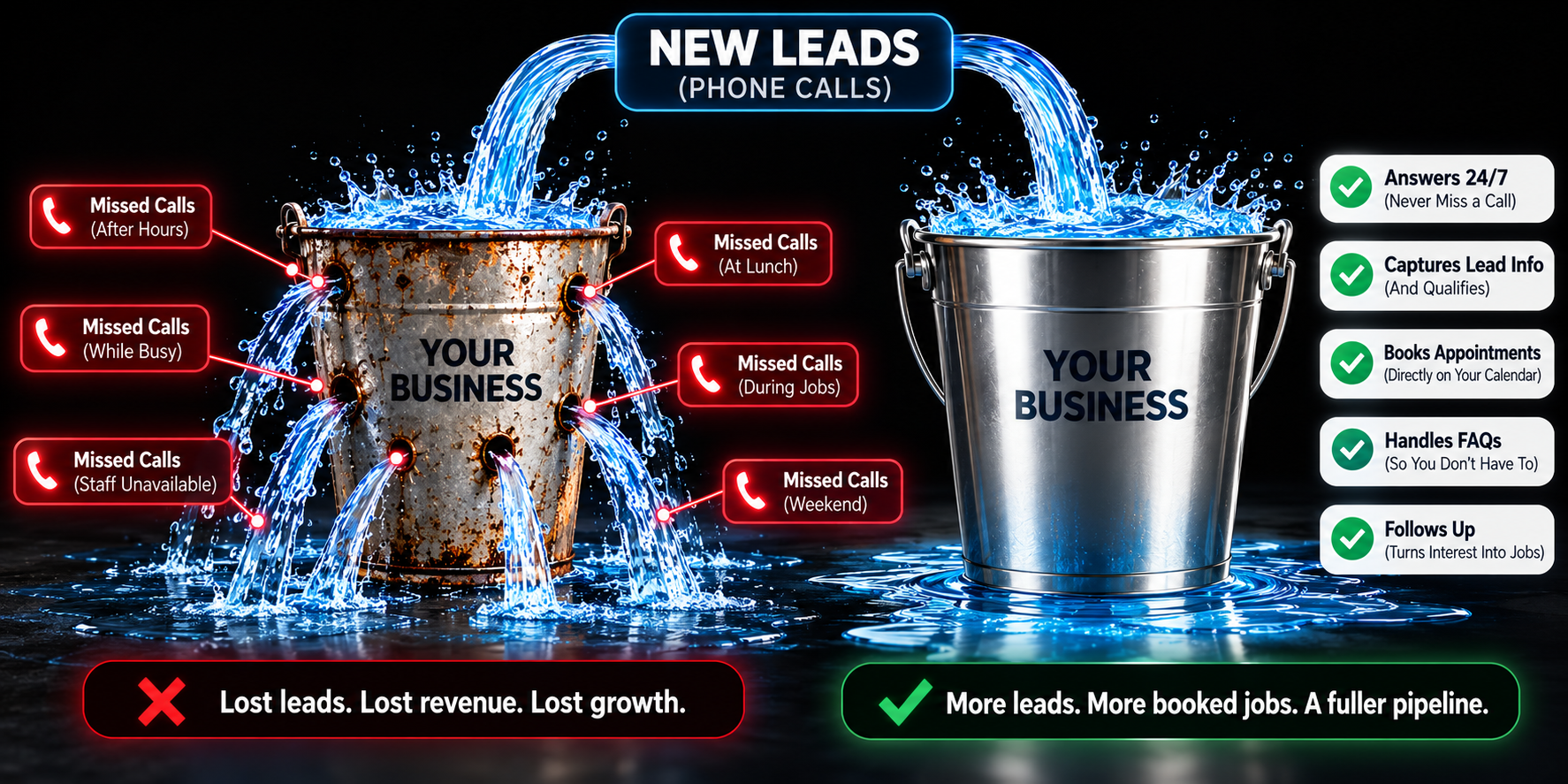
Every missed call represents a potential customer slipping through one of those holes. Common leaks include:
- After-hours calls: Customers need help when your office is closed.
- Simultaneous calls: Two customers call, but only one employee is available.
- Busy phone lines: Your staff is assisting someone else.
- Lunch breaks and meetings: Nobody is free to pick up.
- Weekends and holidays: Customers keep searching even when you're closed.
When sales slow down, businesses often respond by spending more on marketing. But pouring more water into a leaking bucket doesn't fix the problem.
2. What Is an Ai Receptionist?
An Ai receptionist is an artificial intelligence-powered phone system that answers business calls, speaks with customers, collects information, answers questions, and—when properly integrated—schedules appointments automatically.
Unlike voicemail, which records a message, an Ai receptionist has a two-way conversation. It can understand a caller's request, ask relevant follow-up questions, and act according to the business's rules.
Imagine a homeowner calling a plumbing company at 8:45 p.m. because their water heater stopped working. Instead of hearing “We’re currently closed,” the caller is greeted by an Ai receptionist that asks about the problem, confirms the address and service area, checks the calendar, and books an appointment for the next morning. The homeowner knows when to expect help, and the plumbing company starts the day with a new appointment already on the schedule.
3. What Can an Ai Receptionist Actually Do?
Cover missed, overflow, weekend, and after-hours calls.
Use a connected calendar and approved scheduling rules.
Collect service needs, customer location, and urgency.
Explain service areas, availability, and common procedures.
Route urgent requests, existing customers, or specific questions to the appropriate team member based on your rules.
Record summaries, contact information, and call outcomes.
Send appointment confirmations, follow-up messages, customer details, or internal notifications by text or email when configured.
These capabilities depend on configuration and integrations. Not every Ai receptionist offers all of them. A plumbing business needs different workflows from a remodeling contractor or an HVAC company.
4. We Studied 200 After-Hours Calls. Here's What We Found.
Biz Into Ai examined an observational sample of 200 business calls made after 7 p.m. to see what happened when callers reached out after normal working hours.
Here's the problem with voicemail: most callers don't want to leave a message and wait. They called because they need help now. When they hear a recording instead of a person who can answer their questions, many hang up and move on to the next company that answers. That company may book the job before you even listen to your voicemail.
Think about the 130 calls in our 200-call after-hours sample that reached voicemail. We don’t know how many became lost customers, but each call represented a potential opportunity. One caller could have been worth $5,000, $10,000, or even $20,000+ in lifetime customer value through repeat jobs, maintenance, and referrals. These are illustrative amounts, not measured losses from our study. Losing a caller can mean losing far more than one appointment.
Many traditional answering services take messages instead of booking jobs. Customers still have to wait for a callback—and may contact a competitor in the meantime.
A properly built Ai receptionist answers questions, qualifies leads, books appointments directly into your calendar, sends confirmations, and transfers urgent calls to the right person.
The goal isn’t more messages. It’s more booked jobs—even when your business is closed.
5. Why Texting Missed Calls Isn't the Same as Answering Them
Some businesses automatically text missed callers: “Sorry we missed your call. How can we help?” That's better than doing nothing, but it doesn't completely solve the problem.
Someone calling an HVAC company may want to know whether the company serves their neighborhood, how soon a technician can arrive, and what happens next. They called because they want a conversation. A text starts a separate exchange that still requires answers.
An Ai receptionist can begin addressing those questions immediately while the customer is on the phone. Texting remains useful for confirmations, reminders, and follow-ups—but it isn't the same as answering the original call.
6. Three Types of Ai Receptionists for Service Businesses
Backup Ai Receptionist
Replace your voicemail with an Ai receptionist that answers calls and books appointments when your team is busy, unavailable, or closed. Keep your existing phone number and staff while ensuring more callers get help instead of a voicemail greeting.
Primary Ai Receptionist
Serves as the first point of contact for incoming calls and transfers callers to humans when appropriate. Useful for businesses seeking consistent around-the-clock coverage.
Outbound Ai Appointment Setter
Calls new website or advertising leads soon after an inquiry, asks qualifying questions, and works to schedule appointments. Particularly useful for businesses investing in lead generation.
These options can be combined. A plumbing company can keep its existing receptionist, add Ai backup for unanswered calls, and respond immediately to new website inquiries.
7. Why Some Ai Receptionists Fail
An Ai voice is not the same thing as a properly developed Ai employee. A short demo may sound impressive, but real customer conversations introduce complexity. A caller changes their mind halfway through booking. Someone requests service outside the coverage area. The calendar integration fails. An existing customer needs a human.
An improperly built Ai receptionist can cost you customers—not just fail to capture them. Incorrect bookings, double-booked appointments, made-up answers, failed transfers, and frustrated callers stuck talking to a malfunctioning robot can damage trust in your business. Imagine a customer being promised a morning appointment that never appears on your calendar. They may take time off work, wait for a technician who never arrives, and decide never to call again. That is why realistic call testing, verified calendar and CRM integrations, clear escalation rules, and ongoing maintenance are essential—not optional extras.
A Developer's Perspective: Build an Employee, Not Just a Bot
As an Ai receptionist developer and expert, I approach these systems as virtual team members—not generic voice bots. At Biz Into Ai, our goal is to develop a system that understands how each business operates: what it should know, what it should never promise, which leads it should qualify, when to book, and when to transfer to a human.
Ongoing management matters too. Businesses change their hours, services, employees, and scheduling rules. Their Ai receptionist needs to keep up. A system that works on launch day can become unreliable if nobody maintains it.
8. How Much Money Could an Ai Receptionist Help Recover?
Every missed call could represent a job opportunity. Use the two inputs below to estimate the potential value of calls your business misses each month.
Enter the number of calls your business misses each month and your average job value to see the total potential value of those opportunities.
Illustrative maximum opportunity, not expected or guaranteed revenue. This calculation assumes every missed call represents one potential job at the entered average value; many calls will not become paying jobs.
The meaningful measurement isn't just calls answered. It's qualified opportunities captured, appointments booked, and completed jobs generated.
9. How to Choose the Right Ai Receptionist
Before selecting a provider, ask: Can this system actually do the job my business needs it to do?
Test a complicated service question, an urgent customer, a booking request, an existing client, and a caller who asks for a human. Ask to see the appointment in the calendar. Ask where the call summary goes. Ask what happens when the system doesn't know the answer. Most importantly, ask who maintains it after launch.
10. Why Biz Into Ai Is the Right Choice for a Properly Built Ai Receptionist
Anyone can launch a voice bot. Building one that reliably represents your business is a different job. At Biz Into Ai, we develop custom Ai receptionists for service businesses—not one-size-fits-all scripts. We learn your services, service areas, hours, booking rules, and escalation needs so your system knows what to say, what to ask, and when to involve your team.
We handle the work beyond the voice: custom development, calendar and CRM integrations, realistic call testing, and ongoing management. Your system can replace voicemail when your team is busy or closed, answer customer questions, capture qualified leads, and book appointments when configured to do so. You also get visibility into call activity and customer information. Depending on your setup, that also includes automated text and email notifications and intelligent call transfers to the appropriate person.
Our difference is that we don't just hand you software and walk away. We build, monitor, maintain, and improve your Ai receptionist as your business evolves—so you can focus on serving customers instead of troubleshooting a bot.
Want to Hear What a Properly Built 24/7 Ai Receptionist Sounds Like?
Meet Tori, our Ai receptionist. Experience how a natural, professionally developed Ai receptionist can answer questions and help book appointments—even when your team is busy or closed.
Request a call from Tori in under 10 seconds.
Test Tori — Request My Call ↗Visit Biz Into Ai to request your live Tori demo. Call timing depends on the demo form and system availability.
11. Frequently Asked Questions
Will my customers actually want to talk to an Ai receptionist?
Customers call because they need help—not because they want to navigate voicemail. Many will appreciate getting their questions answered and an appointment scheduled without waiting. Others will prefer a person. That is why a properly built Ai receptionist should sound natural, be upfront when asked if it is Ai, and transfer callers to your team when needed. The goal is a better customer experience, not forcing everyone to talk to a robot.
Will an Ai receptionist sound robotic or frustrate my customers?
It depends on how the system is built. A poorly developed Ai receptionist can repeat itself, misunderstand requests, make incorrect bookings, or frustrate callers enough to hang up. A professionally developed system is tailored to your services, tested against real call scenarios, and continuously maintained. Good voice technology matters, but accurate answers and reliable actions matter even more.
Can an Ai receptionist actually book appointments, or does it just take messages?
Yes. When integrated with your scheduling system, a properly configured Ai receptionist can ask the right questions, check available times, book appointments directly into your calendar, and send confirmations by text or email. It can also transfer urgent requests to the appropriate person. Unlike a message-only answering service, it can help move a caller from inquiry to confirmed appointment during the same conversation.
Do I have to replace my current receptionist or business phone number?
No. Many service businesses start by replacing voicemail—not their staff. Their team answers calls as usual, and unanswered, overflow, or after-hours calls forward to the Ai receptionist. In many cases, you can keep your existing business number and phone provider. The setup depends on your carrier and call-forwarding options.
What happens if the Ai doesn’t know an answer or a customer needs a real person?
A reliable Ai receptionist should never guess about pricing, availability, or services it cannot verify. It should follow your rules: transfer the call to the appropriate employee, escalate an urgent request, or collect details for a callback when a transfer is unavailable. These safeguards are part of proper development and testing.
How much does an Ai receptionist cost, and is it worth it?
Pricing varies based on call volume, appointment-booking features, integrations, and ongoing management. The better question is how many missed opportunities it helps recover. For example, at a $500 average job value, four additional completed jobs would represent $2,000 in gross job revenue—not profit. Results depend on your call volume, lead quality, booking rates, and actual completed jobs.
How difficult is it to set up an Ai receptionist for my business?
With a managed provider, setup should not become another project for your team. At Biz Into Ai, we learn your business hours, services, service areas, scheduling rules, emergency procedures, and transfer preferences. We then build, integrate, test, and manage the receptionist, making updates as your business changes. You stay focused on running the business while the system handles the calls it is trained to handle.
The Bottom Line: Stop Filling a Bucket That Keeps Leaking
You can have the best ads in your industry, rank first on Google, and earn hundreds of great reviews. But if customers call and nobody answers, those advantages may never become revenue.
When properly developed, an Ai receptionist helps make your business available when your team isn't. For many businesses, the best first step isn't replacing their receptionist. It's replacing the voicemail that can't help customers.
Editorial note: The 200-call figures are Biz Into Ai observational data and should be published with their collection method and limitations. The revenue calculator is hypothetical. The bucket illustration is a conceptual comparison, not a claim of guaranteed results.